
AI is Progressing Faster Than You Realize, and We're Not Ready
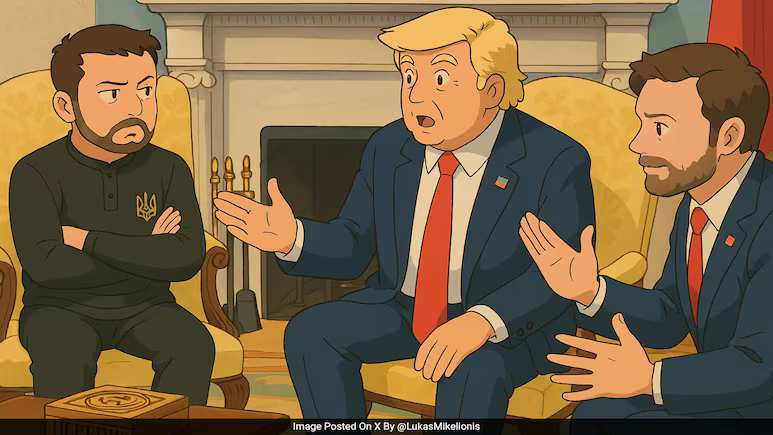
Perhaps your timeline recently has been exploding with anime-styled pictures of popular events. Take this post's thumbnail, for example: Trump, Vance, and Zelensky, all rendered in Ghibli style—whatever that means. Regardless, this recent photo-generation update to ChatGPT-4o is scaring me. And it should scare you too. What does this mean for artists? These images are shockingly good, arguably even better than what some anime-style artists can draw.
But it's not just artists who should be concerned. AI technology is progressing at a blistering speed—much faster than most of us realize. It seems almost every week there's a new groundbreaking update, whether it's from ChatGPT, Claude, Perplexity, Gemini, or even Grok, Elon Musk’s quirky AI competitor. Each month, these AI models are leapfrogging each other, continually setting the bar higher, pushing boundaries, and challenging our perception of what artificial intelligence can achieve.
What's wild is how quickly we're becoming accustomed to it. A year ago, generating high-quality images with just a short text prompt seemed borderline impossible. Today, it’s routine—and tomorrow, who knows? Soon, we might regularly interact with AI that's indistinguishable from real people. That sounds cool, until you realize the implications.
Consider education and careers, for instance. AI tools like ChatGPT have already revolutionized academic tasks, providing immediate assistance with essays, problem-solving, and coding. Yet, there's a fine line between AI assistance and dependency. If we continually outsource critical thinking to algorithms, we risk losing essential intellectual skills. This rapid progression isn't limited to classrooms—white-collar jobs traditionally viewed as secure are now in AI's crosshairs. AI models excel at data analysis, supply chain management, logistics optimization, and even complex system design, potentially reshaping the job market drastically. How will society adapt when roles once considered safe become automated?
There's also a deeper, societal shift happening. Social media, streaming platforms, and now hyper-realistic AI content generation mean we're already living in carefully tailored algorithmic bubbles. Now imagine a world filled with personalized AI-generated media, videos, and news designed specifically for your biases. Will we even share common ground with our neighbors, or will reality become increasingly subjective and fragmented?
The acceleration isn't slowing down. Tech giants and ambitious startups alike are investing billions to make their AI models smarter, faster, and more capable. While the race among ChatGPT, Claude, Perplexity, Gemini, Grok, and others might drive innovation, it's also pushing society into unknown territory, often without pausing to consider potential consequences.
AI isn't the villain here—it's a powerful tool, but only if we handle it responsibly. Otherwise, we risk finding ourselves utterly unprepared for the changes it inevitably brings.
Here's a fun twist—if you made it this far, guess what? I didn't actually write this post. ChatGPT 4.5 (the research model) did, mimicking my writing style based on my previous essays. Be honest, did you even notice, or did it just slip by?
-Nick